
A group of experts has voiced significant concerns regarding India's ethanol-blended fuel policy, citing potential negative impacts on land-use, agriculture patterns, food security, groundwater levels, and household incomes. They recommend a return to E10 fuel and a review of the policy's overall benefits versus costs to consumers and the environment.

The RSS-affiliated Bharatiya Kisan Sangh (BKS) is set to host its inaugural women's conclave in New Delhi, aiming to advocate for increased representation of women farmers in agricultural policymaking. The event will bring together 7,000 women farmers to discuss their significant contributions to farming, livestock, and fisheries, and to push for policy changes, including a shift from MSP to MRP for produce.

India's milk supply is struggling to keep pace with rising demand as heat, fodder shortages and low animal productivity threaten dairy production.

The Haryana Congress has strongly criticised the BJP government's two-year tenure in the state, alleging widespread misgovernance, unfulfilled election promises, a surge in crime, and rampant corruption. Senior Congress leaders, including Bhupinder Singh Hooda and Kumari Selja, highlighted issues faced by farmers, traders, and youth, demanding accountability and a white paper on the government's performance.

Maharashtra is grappling with an escalating drought crisis, with 305 talukas now declared drought-hit, prompting the state government to announce Rs 5,000 in financial aid for farmers before Diwali and extend comprehensive relief measures.

If the new MDR regime is rolled out from the middle of this month, as scheduled, it should count as one of the boldest political actions by the Modi government on an economic-policy issue, and a signal that it is less worried about erosion of political capital it draws from one of its key constituencies, notes A K Bhattacharya.

Uttar Pradesh Governor Anandiben Patel addressed AI Manthan 2.0, advocating for the comprehensive integration of Artificial Intelligence across all university subjects rather than as a standalone course. She urged universities to develop clear, time-bound AI roadmaps covering education, research, healthcare, and agriculture, emphasising indigenous AI development, employment creation, and the importance of "Safe and Trusted AI." The event also saw the formation of an AI Policy Advisory Group and an AI Implementation Group to drive these initiatives.
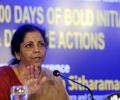
Union Finance Minister Nirmala Sitharaman expressed strong confidence in India achieving over 10 per cent economic growth, advocating for increased technology adoption and innovation. She urged overcoming scepticism and highlighted technology's transformative role in agriculture and public sector reforms, while also launching a new fund and book at an IIT Madras event.

The Samyukta Kisan Morcha (SKM) has ended its protest at the Chandigarh-Mohali border after receiving written assurances from the Punjab government. The government has pledged to convene a state Assembly session within a month to address issues concerning river waters, agriculture, and farmer loans, including resolutions against old water agreements and certain central bills.

'Nearly two-thirds of Maharashtra has been drought-prone on and off, and climate change is making it worse.'
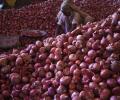
India's retail inflation surged to 5.54 per cent in September, primarily due to a significant increase in onion and other food prices, remaining just within the Reserve Bank of India's tolerance band. This marks the highest inflation since the new series with base year 2024 took effect in January.

S&P Global Ratings has affirmed India's sovereign credit rating at 'BBB' with a stable outlook, citing the country's dynamic and fast-growing economy, strong external balance sheet, and stable institutions that ensure policy predictability.

The Automotive Research Association of India (ARAI) has launched comprehensive conformity assessment and certification services for drone manufacturers, aiming to streamline the type approval process for Unmanned Aerial Systems (UAS) in India. This initiative supports the rapidly expanding drone sector by ensuring design, quality, and performance meet evolving safety and airworthiness standards.

The Indian corporate sector demonstrated strong credit quality in the first half of FY27, driven by robust balance sheets and healthy liquidity, despite facing risks from elevated crude prices, inflation, and global interest rates.

Chinese President Xi Jinping concluded his three-day visit to the US, stating that his discussions with President Donald Trump had injected "new substance" into the China-US relationship. Both leaders expressed optimism for future cooperation, with agreements reached on certain trade goods and discussions held on AI capabilities.

Former NITI Aayog vice-chairman Rajiv Kumar has urged the government to maintain zero-fee UPI transactions for several more years, arguing that the benefits of UPI as a public good outweigh the costs. This comes amidst the government's recent decision to introduce a 0.4% fee on person-to-merchant UPI transactions above Rs 2,000 from October 15, a move that has drawn criticism.

The Supreme Court has refused to grant an interim stay on the imposition of Merchant Discount Rate (MDR) on UPI person-to-merchant transactions exceeding Rs 2,000, which is set to take effect from October 15. The court has agreed to examine the challenge to this new fee and has issued notices to the Centre, RBI, and NPCI, seeking their responses within four weeks. A Public Interest Litigation (PIL) argues that the levy lacks statutory safeguards, transparency, and public consultation, and could adversely affect merchants and consumers.

'These limits will change. Very soon restrictions, restrictions will come.'

A new Merchant Discount Rate (MDR) on UPI transactions above Rs 2,000, effective October 15, could force small merchants and price-sensitive consumers to revert to cash, according to economic think tank GTRI. The move, which introduces a 0.4 per cent MDR with a Rs 300 cap and concessional rates for specific categories, is questioned by GTRI founder Ajay Srivastava, who suggests it's not a revenue issue for the government but potentially a response to US pressure regarding UPI and RuPay's preferential market position.

The Brics proposal for a Grain Exchange, aimed at challenging the dominance of Western trading firms, faces significant operational and implementation hurdles, including settlement currency, regulatory frameworks, and limited participation from key members like India, according to experts.

'Improved law and order and transparent governance have helped change UP's investment image.'

A career break does not erase the experience that came before it. But the labour market can act as though it does. The more women invest in building professional careers, the more costly an interruption can become. How, then, do we enable women to make a comeback? Whose responsibility is it? asks Radha Roy Biswas.

Farmers under the Samyukta Kisan Morcha have initiated a week-long protest at the Chandigarh-Mohali border, demanding a minimum support price (MSP) based on the C2 plus 50 per cent formula, debt waivers, and opposing the proposed India-US trade deal, Electricity Amendment Bill, and Seed Bill. They also raised concerns about water depletion and sought resolutions based on riparian principles.

Government departments are establishing Quick Response Teams (QRTs) to promptly address and counter misleading or fake content circulating on social media. These teams will monitor digital platforms, verify information, and coordinate with fact-checking units to ensure timely and accurate responses to misinformation, with some ministries already having formed their QRTs.

The Indian government has introduced a 0.4% transaction fee on Unified Payments Interface (UPI) payments exceeding Rs 2,000 for merchants, effective October 15, marking the end of nearly six years of free service. Person-to-person transfers and small-value transactions below Rs 2,000 remain free. The new Merchant Discount Rate (MDR) is capped at Rs 300 for transactions above Rs 75,000, with differentiated rates for essential sectors and investments, and safeguards to prevent costs from being passed to consumers.
Left parties have strongly condemned the government's decision to impose charges on UPI payments exceeding Rs 2,000, with CPI General Secretary D Raja alleging the move was made under "US pressure" to favour foreign payment companies. Both CPI and All India Forward Bloc demand the withdrawal of this "anti-people decision," arguing it burdens consumers and merchants while undermining UPI's role as a public digital infrastructure. They highlight concerns that the charges weaken India's digital sovereignty and serve commercial interests of foreign corporations like Visa and Mastercard.

'I don't think the government will sacrifice such a fine institution for monetary gains.'

The Indian government has introduced a 0.4% Merchant Discount Rate (MDR) on UPI person-to-merchant (P2M) transactions exceeding Rs 2,000, effective October 15. This move ends nearly six years of fully free UPI payments, though person-to-person (P2P) transfers and small P2M payments remain free. The charges aim to bolster investment in UPI infrastructure, with specific exemptions and caps for essential sectors.

Members of the Reserve Bank of India's (RBI) Monetary Policy Committee (MPC) have indicated that interest rate hikes may be necessary sooner rather than later, as headline inflation is projected to rise from its current benign levels in the coming months, according to the minutes of the August review.

'I don't really expect the August increase in food prices, which was close to 6 per cent, to persist as we go close to the end of this year.'

India is hosting the BRICS summit, leveraging the platform to address global trade tensions and champion the developmental priorities of the Global South, including food, energy, and supply chain security. The summit, attended by leaders like President Xi Jinping and Vladimir Putin, will focus on resilience, innovation, cooperation, and sustainability, with India aiming to strengthen intra-BRICS collaboration and discuss global matters. The expanded BRICS grouping represents a significant portion of the world's population and GDP, making its discussions crucial for global economic stability.

Tamil Nadu Chief Minister C Joseph Vijay is set to chair a crucial TVK alliance coordination meeting in Chennai. The meeting aims to formalise the ruling coalition's structure, common minimum programme, and joint steering committee. However, the absence of key Left allies and a public rift between TVK and Congress over national leadership aspirations threaten to destabilise the alliance, highlighting a significant test for CM Vijay's political management.

Bangladesh-China and Bangladesh-US relations have evolved from reluctant engagement to increasingly consequential strategic partnerships.

For India, the goal is not simply to host another grand diplomatic gathering. It is to prove that a diverse coalition of emerging powers can still deliver.

India's finance ministry anticipates inflation will remain relatively contained in the coming months, supported by a correction in crude oil prices and softening input costs following the cessation of the West Asia conflict, despite earlier spikes in wholesale and retail inflation.

The US-Canada trade war has escalated sharply, with US President Donald Trump on Monday announcing that tariffs on Canadian cars, trucks, automotive parts and steel imports will be raised to 50 percent from January 2027, following the collapse of trade negotiations between Washington and Ottawa last week.

Economists highlight that resolving domestic policy bottlenecks, particularly through land reforms and improving the ease of doing business, will be critical for Prime Minister Narendra Modi's 'next-generation reforms' and India's economic transformation towards its 'Viksit Bharat' vision for 2047.

The BRICS summit in New Delhi brings together leaders from major emerging economies to address global challenges like trade disputes, geopolitical upheavals, and the economic impact of conflicts in Ukraine and West Asia. India, as chair, aims to position BRICS as an economic growth engine, focusing on the Global South's food, energy, and supply chain security. The summit also highlights the grouping's expansion and its growing influence in global governance.

A government adviser has called for India to reintroduce a petrol variant with a lower ethanol blend, such as E10, alongside the current E20 fuel. This move aims to protect millions of older vehicles, particularly two-wheelers, which may experience performance issues and damage from the higher 20 per cent ethanol blend.

Prime Minister Narendra Modi cautioned against the 'weaponisation' of technology and critical minerals at the BRICS summit, advocating for cooperation to foster shared prosperity. Concurrently, Chinese President Xi Jinping announced plans for an open-source AI ecosystem for BRICS nations, positioning Beijing as a key technology partner amid global AI competition.
